

Report Finds Proposed Statewide Rent Control Would Shift Tax Burdens Onto the 62 Percent of Massachusetts Households That Own Their Homes
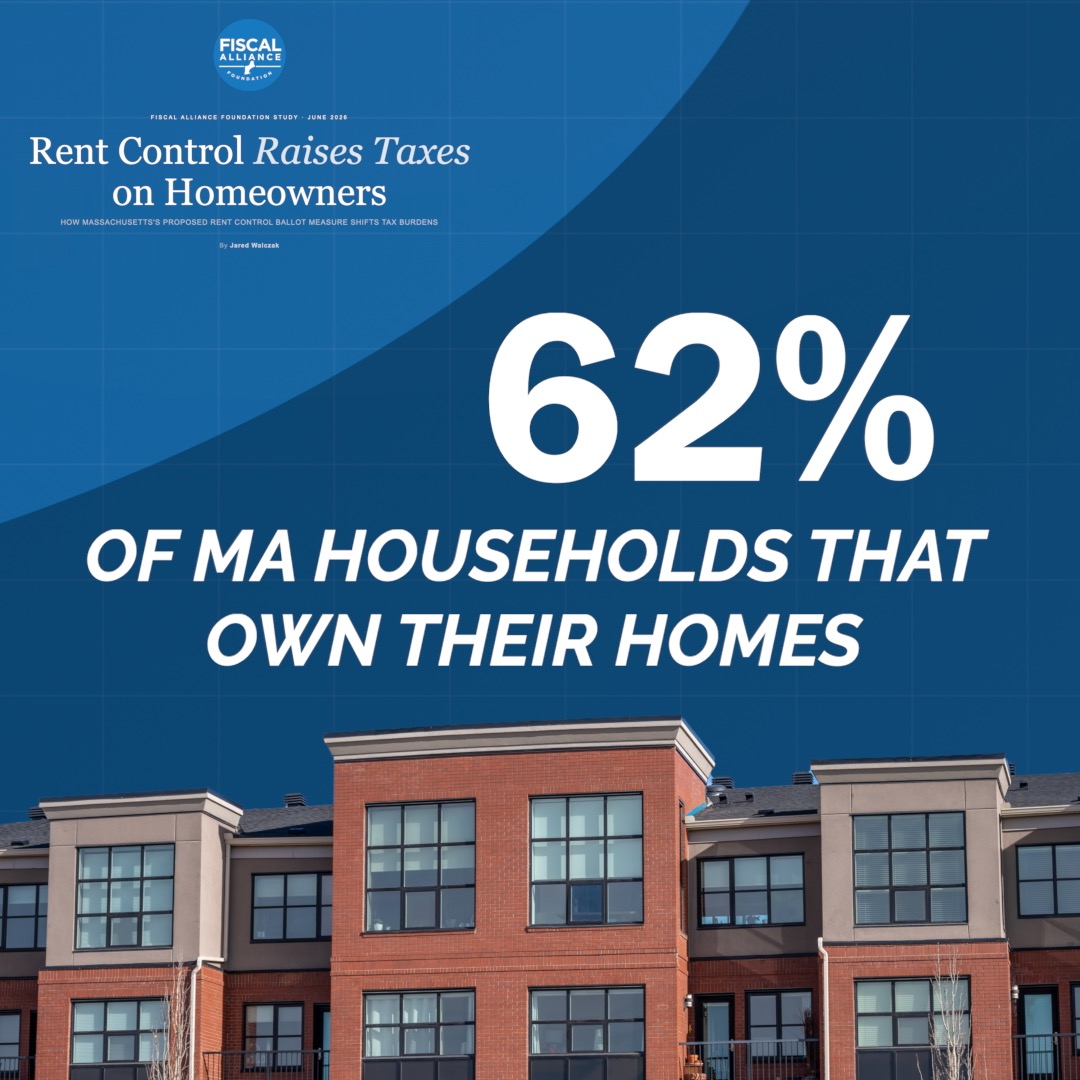
A new study released today by the Fiscal Alliance Foundation finds that the proposed Massachusetts rent control ballot initiative would significantly increase property taxes on homeowners across the Commonwealth, a consequence that has gone largely unexamined in public debate but carries serious financial implications for the state's 62 percent of households that own their homes.
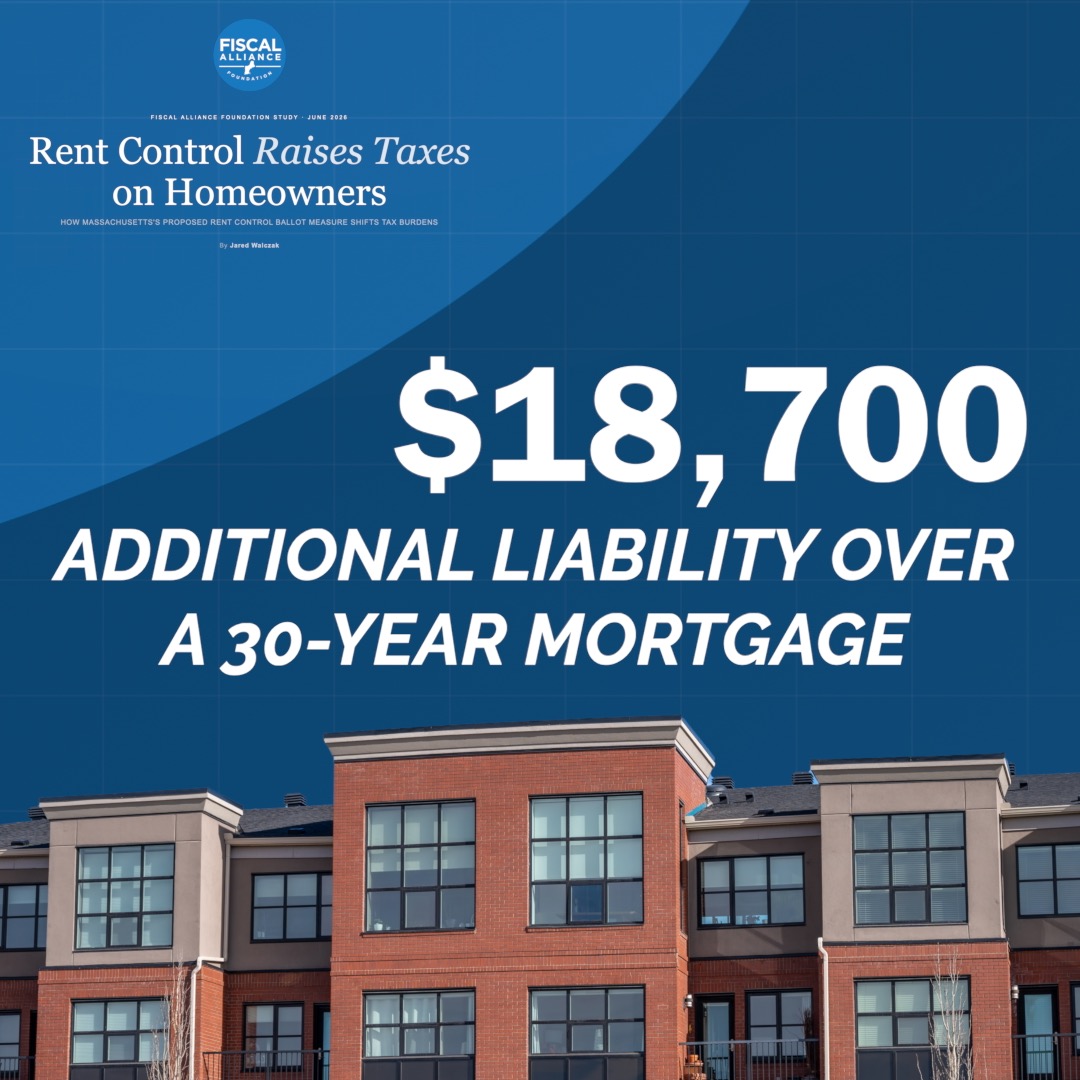
The report, authored by national tax policy expert Jared Walczak, finds that under statewide averages, property tax burdens on the median single-family home would increase by $312 per year under rent control. Had these effects been present over the past decade, the median home's cumulative property tax burden would have been nearly $2,600 higher. For a new homeowner paying off a 30-year mortgage, the additional tax liability over the life of the loan would amount to approximately $18,700.
The impact is not uniform across the Commonwealth. Tax burdens on the average home would rise by an estimated $1,117 in Boston, $889 in Amherst, $570 in Lowell, and $144 in Holden.
"For homeowners, the proposed rent control ballot measure could easily seem like someone else's battle, important to renters and those who own rental properties, but not terribly relevant to those who own their own homes. This belief is perfectly understandable. It is also mistaken. When rent control depresses the assessed value of rental properties, the tax burden does not disappear. It shifts directly onto owner-occupied homes," said study author Jared Walczak.
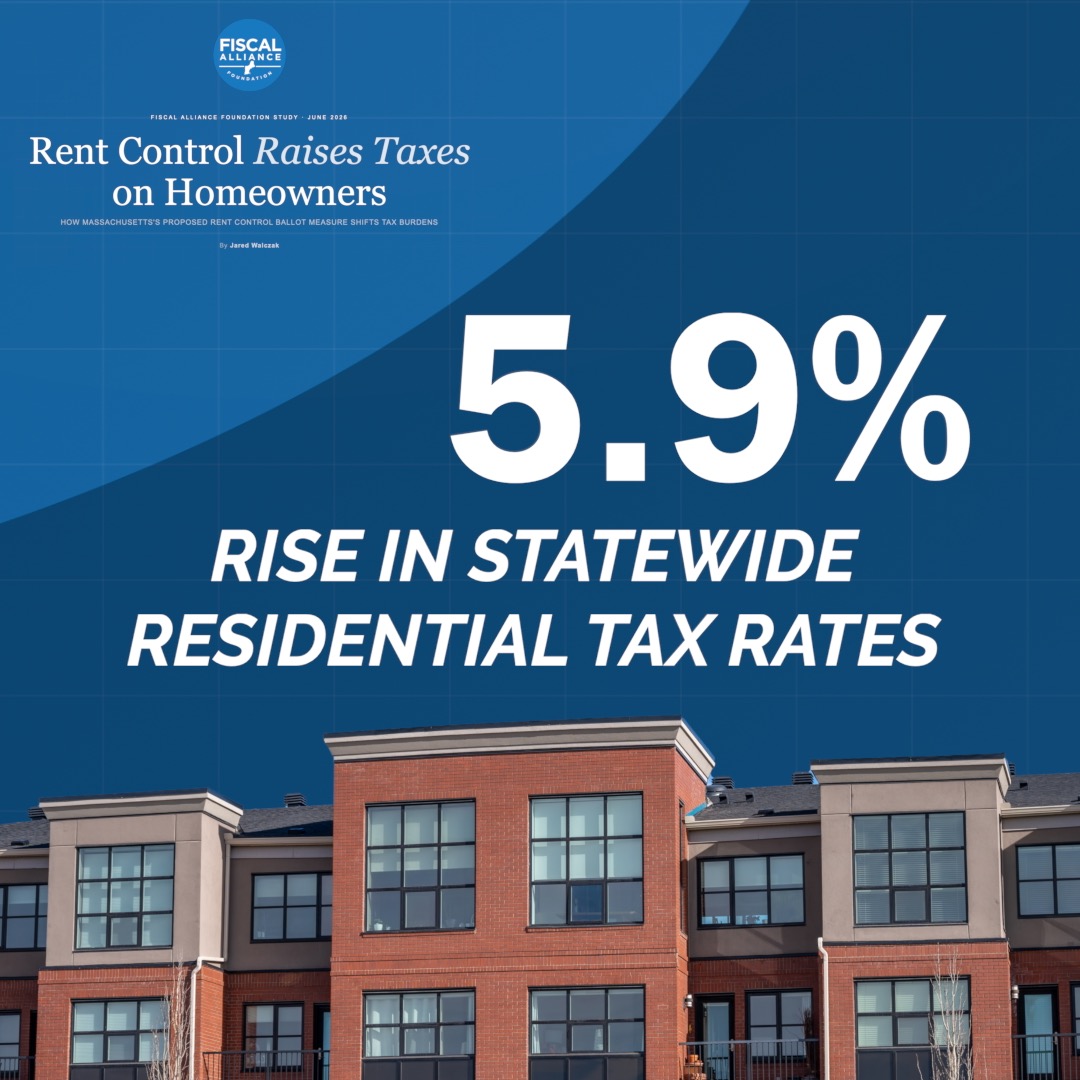
The mechanism is straightforward. Massachusetts uses an income capitalization approach to assess apartment buildings. Rent control immediately reduces those properties' expected income, lowering their assessed values. Because Massachusetts law places single-family homes and large apartment complexes in the same residential property class, the decline in rental property value shifts a greater share of the tax burden onto owner-occupied homes. Mill levies rise to maintain municipal revenue, and homeowners, who are not directly subject to rent control, pay more.
"The Fiscal Alliance Foundation has long fought to protect Massachusetts taxpayers from policies that raise costs on working families without delivering real benefits. This study makes clear that rent control is not just a housing policy. It is a tax increase on homeowners," said Paul Diego Craney, Executive Director of the Fiscal Alliance Foundation.
The study draws on real-world evidence from rent control experiments across the country. In Portland, Maine, where voters approved rent control in 2020, a 2025 analysis found that property valuations had already declined 3.2 to 5.4 percent, increasing the median homeowner's annual tax bill by $224 to $379. In St. Paul, Minnesota, rental property values fell approximately 12 percent within three months of the measure's passage, with immediate spillover effects on owner-occupied property. A study of Cambridge, Massachusetts found that under their previous rent-control regimen, property values were discounted by 45 to 50 percent relative to comparable uncontrolled properties in the same neighborhoods.
The proposed Massachusetts measure is vastly more stringent than any existing rent control regime in the country. It would apply statewide with no municipal opt-out, caps annual rent increases at the lesser of inflation or 5 percent, and contains no vacancy decontrol mechanism, locking in 2026 rental prices in perpetuity for existing properties. Only three states currently have statewide rent control, and each allows significantly higher annual increases than what is proposed here. In short, the Massachusetts proposal would be the most aggressive in the nation.
"Massachusetts tried rent control three times before voters wisely repealed it in 1994. The lessons from Cambridge alone are a textbook case of the policy's unintended consequences. This proposal goes further than anything the Commonwealth or any state has ever attempted. The evidence is overwhelming: rent control reduces the stock and quality of rental housing, harms neighborhoods, and now we can show clearly that it raises taxes on homeowners too," said Craney.
The study also examines the distributional effects of rent control, finding that its benefits disproportionately flow to higher-income renters rather than the lower-income households the policy is meant to serve. An analysis of Massachusetts' prior rent control experience found that people of color occupied only 12 percent of rent-controlled units despite representing 24 percent of residents in rent-controlled cities.
The full report, "Rent Control Raises Taxes on Homeowners," is available by clicking here.